
Move from uneven AI adoption to a safe, repeatable way of working.
Most organizations are already experimenting with AI tools like ChatGPT or Microsoft Copilot, but in practice, usage is uneven, driven by a few individuals, and difficult for leadership to evaluate or govern.
McKinsey’s latest global survey reflects the same pattern: AI use is widespread (88%), but most organizations still haven’t scaled it enterprise-wide.
AI enablement closes that gap by turning scattered experiments into a shared system people can actually use, consistently and safely.


Why AI adoption breaks down in real organizations
Simply deploying AI tools doesn’t automatically change how work gets done. Common failure patterns include:
- Uneven usage: a handful of power users drive results, while most employees stay uncertain.
- Power-user dependency: knowledge silos and bottlenecks form quickly.
- Leadership blind spots: leadership can’t see what’s working, what’s risky, or what to scale.
Enablement solves this by giving teams shared standards, role-specific examples, and hands-on activation rather than generic training.

Our Approach
Install a shared, practical system for AI inside Microsoft 365.
We help organizations build and launch a centralized AI Prompt Library inside Microsoft 365 (SharePoint-based), then enable staff to use it safely and consistently.
Instead of teaching everyone to “figure AI out,” we give your team a common system for how AI is used across roles and workflows, paired with clear guidelines and live enablement sessions.
AI ENABLEMENT
What You Get

AI Usage Guidelines
(clear, practical, lightweight)
Simple, usable standards that set expectations without heavy policy language:
- approved tools
- data handling do’s/don’ts
- when human review is required
- what “good” looks like
Voice profile
Pick a couple of people from your organization and we’ll tailor their ChatGPT to use their voice in emails
Hands-on enablement
- One curated, role-specific working session to build real prompts for a selected role/department
- One all-staff session to activate adoption at scale
Guided AI Assistant
(ChatGPT or Copilot-based)
A “guided” experience for less confident users, aligned to the same prompt standards, so adoption isn’t limited to power users.
Centralized AI Prompt Library
(SharePoint-based)
A single place where your organization’s best prompts live, organized by role and use case so people can find what they need quickly.


What this Delivers
- Faster drafting, analysis, and internal communication
- More consistent AI usage across the organization (not just a few experts)
- Reduced risk from one-off or unsafe AI use
- A foundation that grows as your AI adoption matures
-
Who it’s for
This sprint is a strong fit if you’re seeing any of the following:
- People are using AI, but outputs vary wildly
- Leadership can’t confidently answer: “Is this helping?”
- AI use is creating data-handling and compliance concerns
- Teams want AI value, but don’t know what to reuse or standardize
- Adoption is stuck with a few power users


Engagement Snapshot
- Timeline: 3 – 5 weeks
- Tools: ChatGPT and/or Microsoft Copilot
- Scope: Focused on real-world examples to drive adoption
- Best for: Organizations already using AI and ready to operationalize it
Beyond Copilot: Why AI Readiness Is an Executive Issue in 2026
AI has moved from IT experiment to executive responsibility. In this panel discussion, find out why scaling AI is harder than starting it — and what your organization needs to get it right.
OUR SERVICE AREAS
What comes next?
Many organizations use this sprint as a starting point for deeper governance, Microsoft 365 optimization, or ongoing AI advisory, but the sprint is designed to stand on its own.
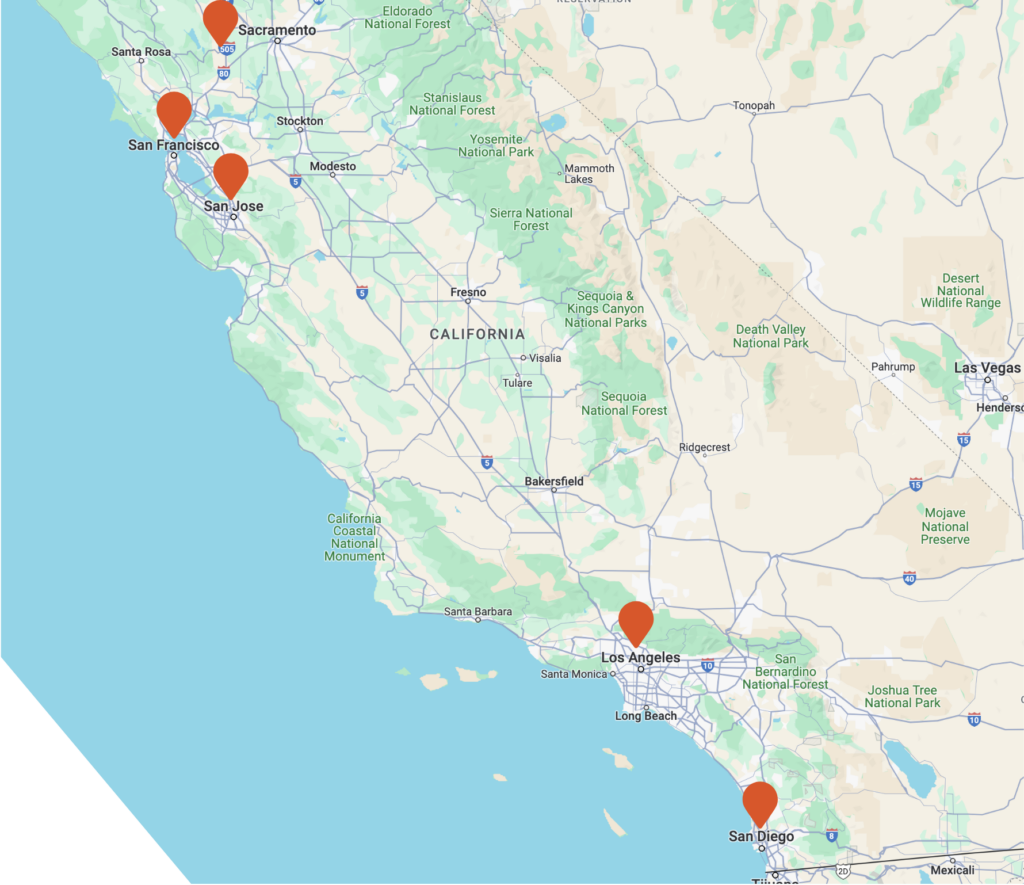
We provide on-the-spot support across California:
Frequently Asked Questions About AI Enablement
What is AI enablement vs AI adoption?
AI adoption refers to people beginning to use AI tools. AI enablement encompasses the full set of capabilities required to make AI adoption successful at scale, including training, standards, governance, and change management. An organization can adopt AI tools without enabling people to use them effectively.
How long does AI enablement take?
The timeline for AI enablement varies based on organizational size, complexity, and starting point. Most organizations see initial results within months as early adopters build capabilities. Broader enablement across multiple departments typically takes one to two years. AI enablement is ultimately an ongoing process rather than a project with a fixed end date, as both technology and organizational needs continue to develop.
Does AI enablement require new tools?
Not necessarily. Many organizations begin AI enablement using existing tools like Microsoft Copilot or ChatGPT. Success depends more on how tools are used than on which specific tools are selected. That said, some organizations benefit from additional capabilities around governance, workflow integration, or specialized applications as enablement matures.
How does AI enablement support responsible AI?
Effective enablement integrates responsible AI principles into daily practice rather than treating them as separate concerns. Through training, standards, and governance processes, enablement ensures that AI use aligns with organizational values around fairness, transparency, privacy, and accountability.
Is AI enablement only for large enterprises?
AI enablement applies to organizations of all sizes, though approaches differ based on resources and complexity. Smaller organizations often move faster with simpler structures, while larger enterprises need more formal programs. The principles of building capability, establishing standards, and managing risk apply regardless of organizational size. Even small teams benefit from intentional enablement rather than ad hoc adoption.
